
The Cellevat3d® nanofiber platform
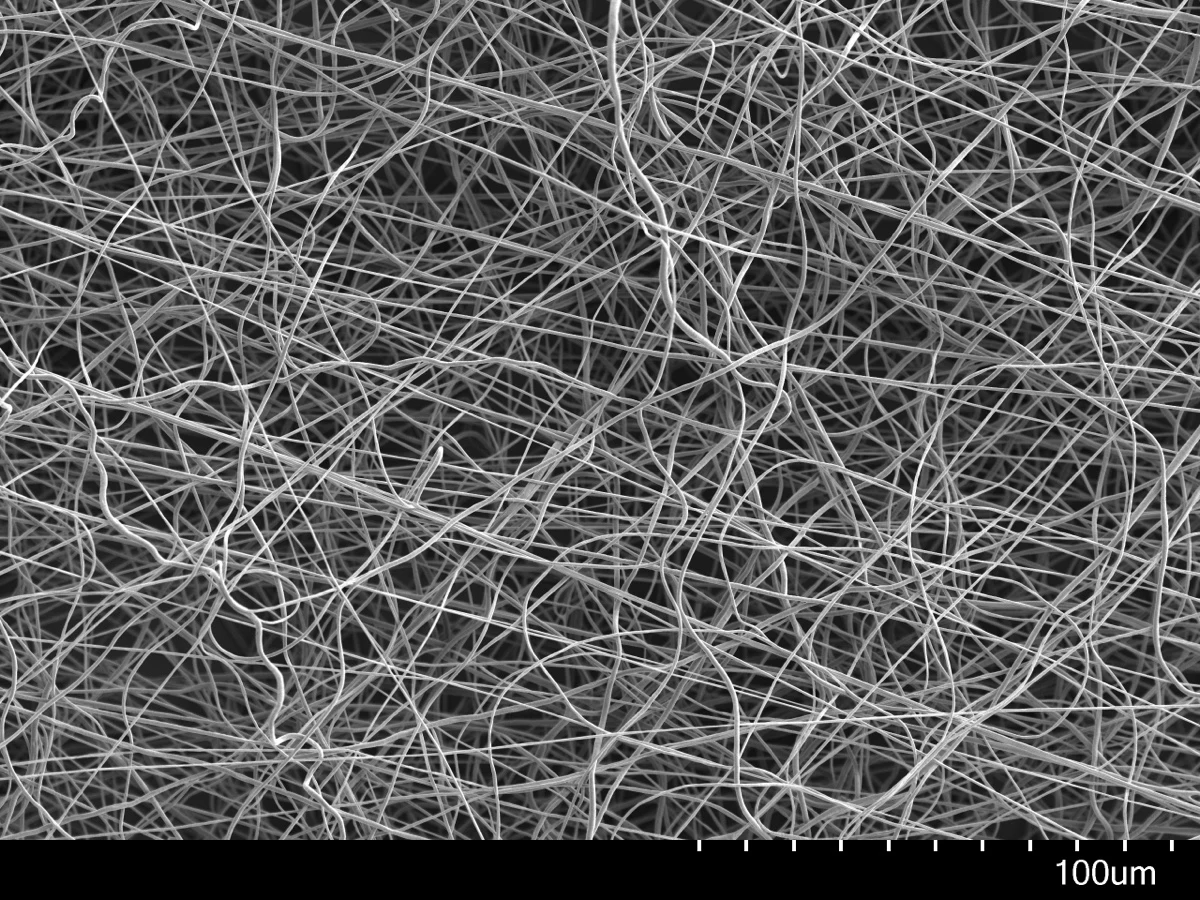
Contemporary microcarriers are polymer beads of 100 to 500 µm. Nanofibers between 1 nanometre and 1 micron give scaffolds an exceptionally large surface area to volume ratio, high porosity and mechanical strength. Cellevate makes them in 3D.
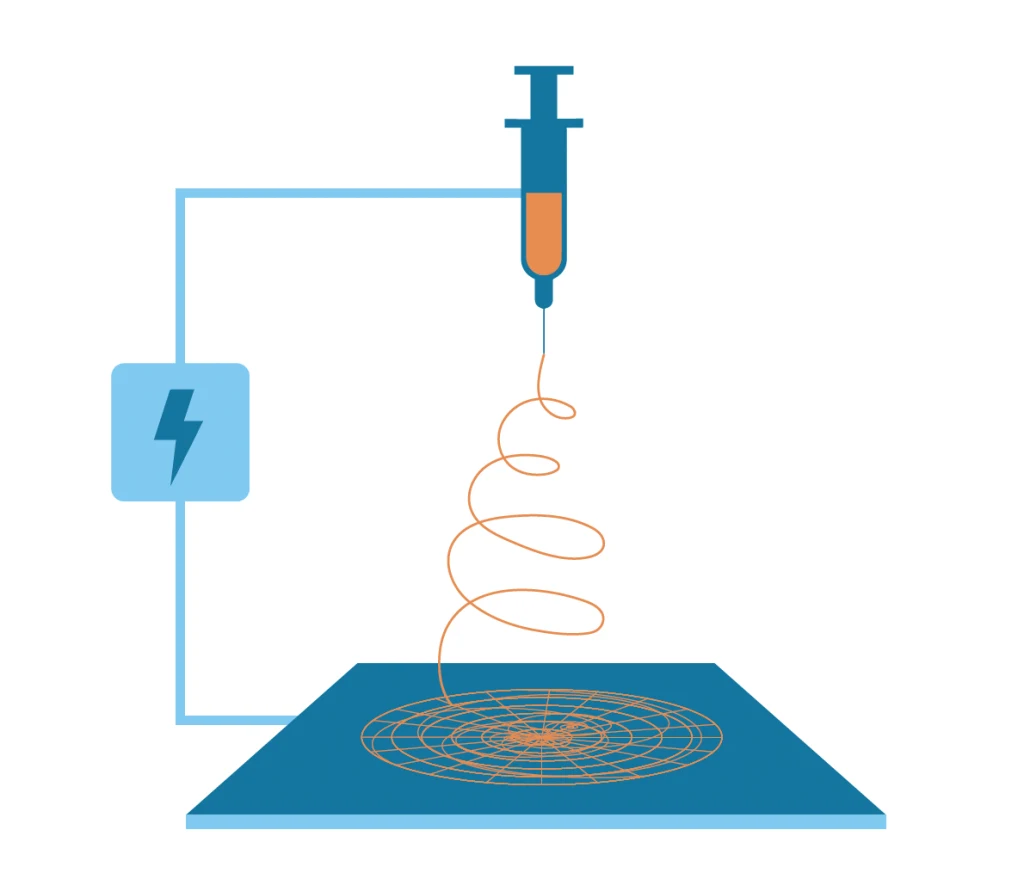
Electrospinning, then one step further
Electrospinning uses electric force to draw charged polymer threads into fibers from a few nanometres to several micrometres in diameter. Even with state of the art equipment, the result is a flat sheet with random or aligned fibers, which limits its use in 3D.
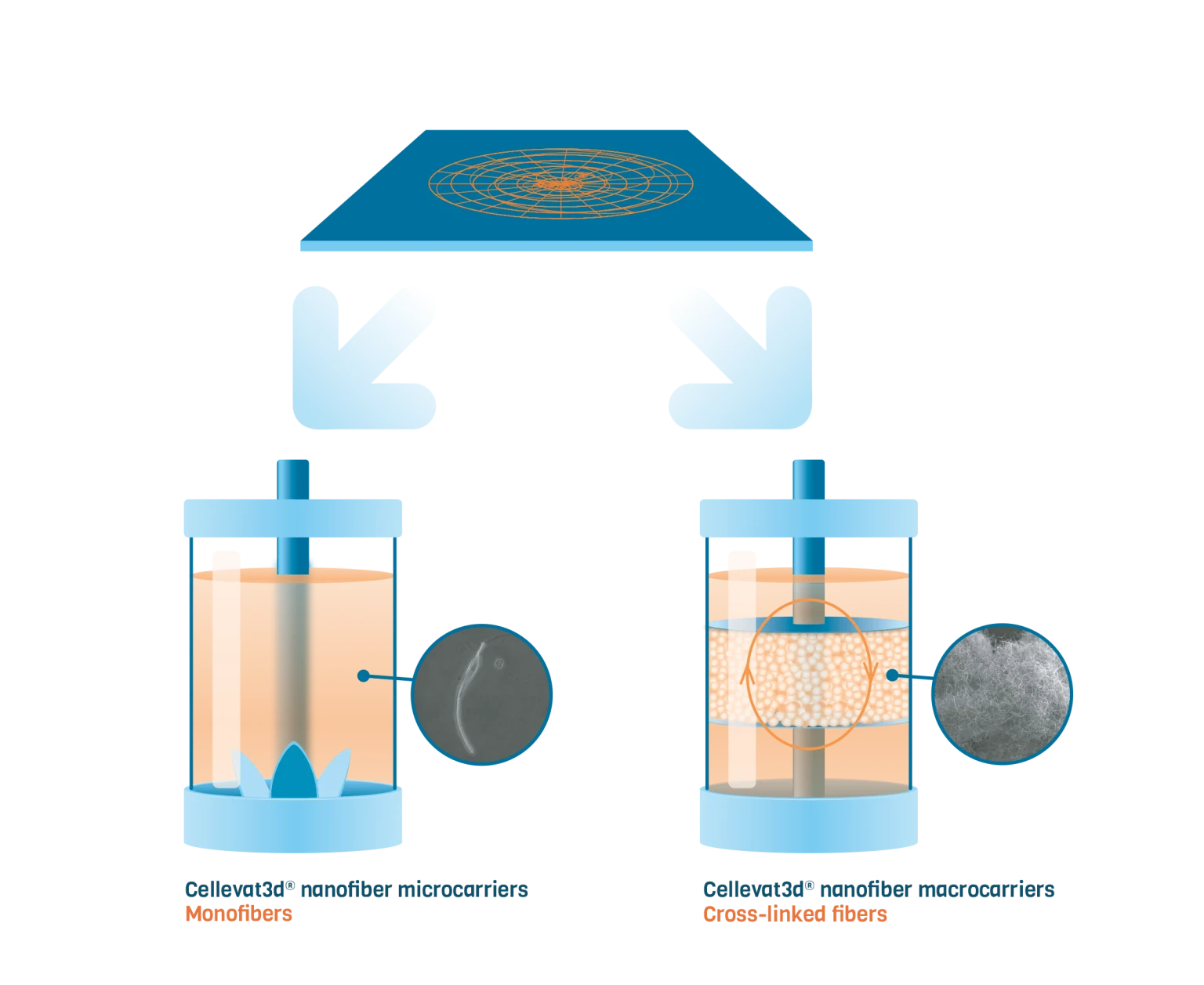
Cellevate adds a proprietary post-electrospinning step that refines both the structure and the function of the fibers. The output is 1D monofibers and 3D cross-linked fiber structures, produced cost-effectively and tuned for cell viability, adhesion, proliferation and volumetric productivity.
Bead versus nanofiber
| Conventional microcarrier | Cellevat3d® | |
|---|---|---|
| Building block | Spherical polymer bead, 100 to 500 µm | Cellulose nanofibers, 1 nm to 1 µm, cross-linked in 3D |
| How cells grow | Monolayer on the bead surface | Cell-dense spheroids within the fiber network |
| Material | Synthetic polymers | Cellulose: biodegradable, fewer microplastics |
| Viral vaccine yield | Baseline | More than 10-fold higher vs current processes |
| Scale | Process changes between scales | Consistent growth from flask to stirred-tank bioreactor |
Performance figures as published by Cellevate.
What the platform brings
Sustainability
Natural polymers like cellulose reduce environmental impact, carbon footprint and waste compared with synthetic polymers.
Scalability
High-throughput production of uniform nanofiber material with consistent quality, built for industrial bioprocess demand.
Flexibility
Precise control over fiber dimensions, porosity and pore size, so each product is designed around its cell type and process.
Applications
Viral vaccine production
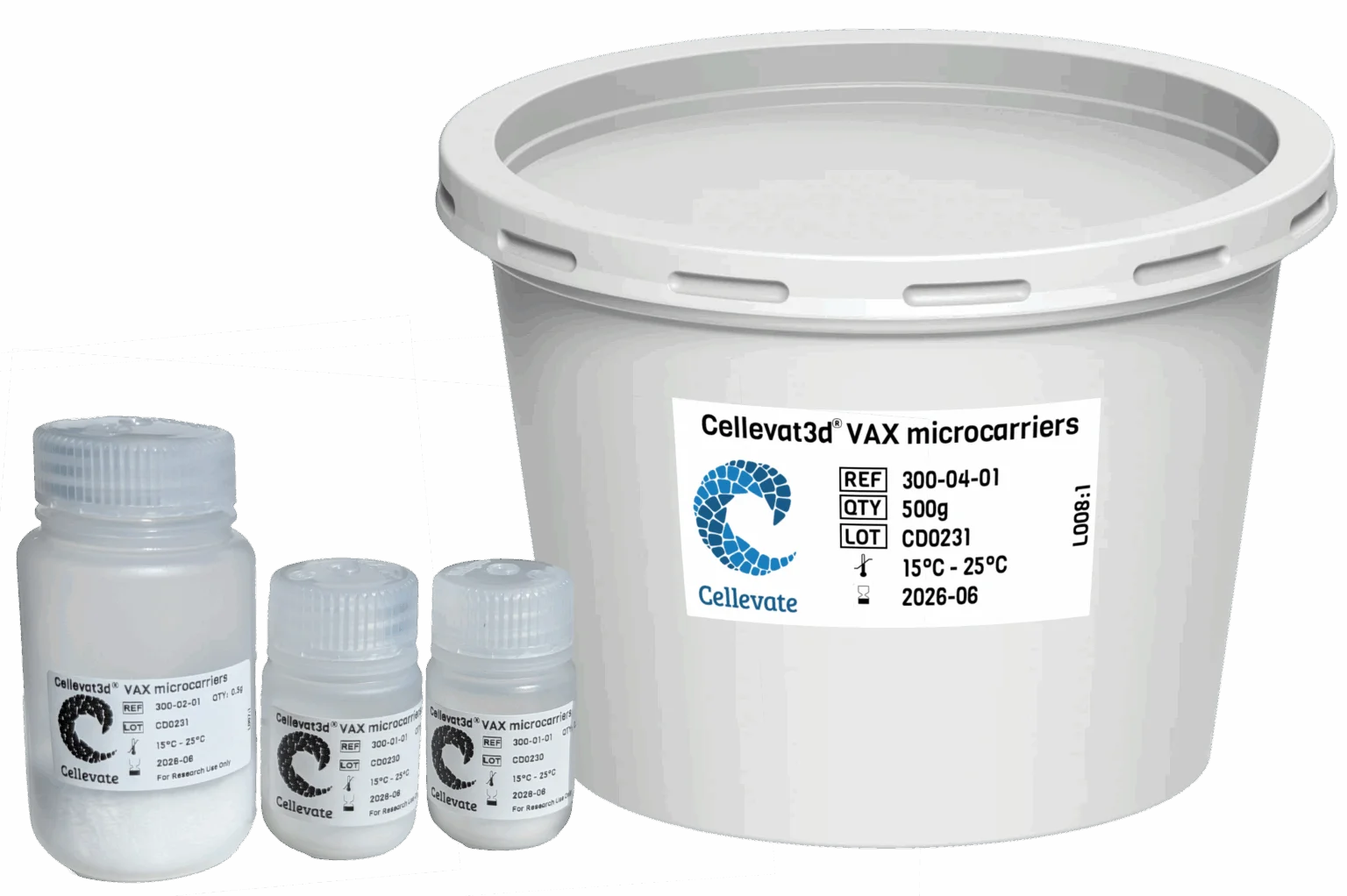
Cellevat3d® VAX microcarriers redefine viral vaccine production with more than 10-fold higher yields, simpler scale-up and direct use in stirred-tank bioreactors.
Lentivirus production
Nanofiber microcarriers for lentiviral vector production in cell and gene therapy, from R&D to commercial scale.
AAV production
High cell density cultures for adeno-associated virus vectors, with reduced waste, water use and processing time.
Bring us your cell line and your current titer
We help you plan a side-by-side run against your existing microcarrier.
sales@cellevate.com→